Australia’s decision to acquire the F-111 wasn’t driven by prestige—it was born from necessity. We explore the strategic realities that shaped one of the RAAF’s most important procurement decisions. With the rise of Cold War tensions in Southeast Asia and Indonesia’s growing military capability, we needed a long-range strike aircraft capable of defending Australia’s vast northern approaches. The F-111 became the only aircraft capable of meeting the RAAF’s demanding requirements. The legendary “Pig” ultimately became Australia’s most effective area-denial weapon for more than three decades.
When in conversation about the history of Australia’s air force, the conversation often gravitates toward the F-111. No other aircraft our air force used has had such a cultural impact as the famed Pig. In fact, even after 16 years of retirement, it remains an icon of our past air power.
We’ve covered the F-111 several times before, often in relation to its time in service, but fewer people remember the reasons Australia even purchased such a unique aircraft. In fact, the air force spent about a decade searching for such a design before finally settling on the Aardvark.
The reason? Well, we didn’t just want a long-range strike platform; we needed one.
HISTORY
Throughout recent history, Australia’s northern approaches have always been a critical vulnerability. The fall of Singapore and the rapid advances by the Japanese in World War 2 had left the Northern Territory exposed to air raids and, unless the Japanese were halted by a combined Allied force, would have been open to invasion.
Ever since then, area denial to our north has remained critical—in fact, it would become a national issue again just a few years after the war.
In 1949, Indonesia emerged as an independent republic from the Dutch. Early on, some analysts believed the nation would align with the First World, becoming a critical ally in Asia, which by then was a geopolitical battleground. The situation quickly deteriorated. By 1950, Sukarno had claims on Dutch New Guinea and had fought the Dutch along its borders in the years prior.
Indonesia appeared to be warming to the Soviets, and by 1960 had both received a visit from Khrushchev and was rapidly militarising, gaining access to a range of new Soviet weapons. This would culminate in the procurement of 24 Tu-16 Badger-Bs in 1961. This was a big deal, as it made Indonesia one of only six countries in the world with access to state-of-the-art strategic jet bombers.
In optimal conditions, the new Badger could fly 7000 kilometres, armed with the AS-1 cruise missile, reaching critical points in Australia from a symbolic location like Jakarta, while flying too high and fast to be intercepted by the Sabre fleet. Australia had no equaliser.
DECISION FOR DEFENCE
In 1954, the Menzies government first floated the idea of replacing the new Canberra fleet with something faster and with longer range. While the aircraft was good, it was both dated and not cut out for long-range, all-weather missions, especially in areas saturated with radar-assisted air defences.
Early on, V-Bombers had been considered, but they were both expensive and dated in various ways. In fact, most available aircraft simply weren’t capable of doing the task hoped for.
Firstly, given the geography, it would need a range similar to a strategic bomber, given the vast expanses off the north coast. Secondly, it would somehow have to slice through complex air defence networks and get out, and thirdly, given that it would be flying over the ocean and sparse islands, it would need advanced navigational equipment, both to put bombs on target and to get home quickly. At the time, this was asking a lot.
NUCLEAR OPTION
Another option on the table was the use of nuclear weapons as a deterrent. The idea was floated in November 1956, and discussions with the British followed, yet it would never take priority. Eventually, in 1969, under Prime Minister John Gorton – who had been a fighter pilot in World War 2 and was keen on strengthening defence – the intent to build a nuclear reactor in New South Wales was announced. However, in 1970, Australia was pressured into signing the Non-Proliferation Treaty, and under the Whitlam government in 1972, all nuclear plans were ended.
CRITICAL NEED FOR F-111
Throughout the 1960s, the situation to our north continued to deteriorate. In 1963, under pressure, the Dutch relinquished control of New Guinea, which was taken by Indonesia. Later that same year, pressure from Jakarta to block the British formation of Malaysia resulted in the Indonesian Confrontation in Borneo.
By 1964, rumours of Tu-16s overflying the Northern Territory undetected began circulating, and by September an increasing number of Sabres and Bloodhound missiles were deployed to Darwin. While the Indonesia situation would thaw in 1965, elsewhere problems persisted; the war in South East Asia was rapidly intensifying, China had tested its first nuclear weapon, and the British were planning to completely pull out of the region. Add to this the uncertain future of the Philippines, Cambodia, and Laos, and it looked as if we were once again being isolated.
All of this further validated the thesis that a new weapon – be it a nuclear deterrent – or preferably an actual standoff platform – was needed to deny access to any incoming adversary, whether our allies were here to help us or not. It also meant that the jet would have to patrol an increasingly large region.
F-111 DECISION
In 1959, the decision to replace the Canberra was once again put forward.
The list of requirements was extensive, but would become even more important as tensions escalated in the early 60s.
The aircraft would have to be fast, with a wide combat radius, large payload capacity, and equipment for precision navigation and weapons delivery. Beyond this, it would need to be all-weather capable and designed to fly into high-threat environments and escape.
Finally, it would need to be capable of landing on existing RAAF runways, which ruled out larger jets like the B-58.
This list of solutions was limited; the F-4C was flexible but lacked range and still relied on more archaic bomb delivery methods. The A-5 Vigilante was more capable for the task, but also more complex and less future-proof.
The decision to replace the Canberra was finally formalised in 1963 with a rise in the military budget, and research to decide on the platform, known as the Hancock study.
On the drawing board were several other designs; the French Mirage IV was one possibility. The others were the British TSR-2 and the American TFX project. All had good specs on paper; however, most were found to be lacking: the Mirage was too expensive, the TSR was both expensive and lacked clear government backing, and the existing designs fell short in terms of range or longevity. Thus, attention was shifted to the TFX by midway through the year.
The Air Force -spec F-111A was impressive on paper; it would have had everything Australia needed, from long range and a large payload to terrain-following, all-weather capabilities. While the whole TFX program was controversial in the US and at home due to cost and feasibility, it did indeed look promising compared to most other options. Finally, on October 24th, 1963, Australia announced it would sign on as the only foreign customer of the F-111, with an order for 24 aircraft to be delivered by July 1968.
Realistically, however, the Hancock study set delivery for 1970 or later and recommended a fleet of 36 Vigilantes as an interim measure. This, alongside a US offer of a small B-47 stopgap fleet, was rejected.
The F-111 would make its maiden flight on December 21st 1964, and soon thereafter, development of the RAAF-spec aircraft would begin. It would have modified landing gear, taken from the FB-111A that was also being built, and an extended wingtip similar to that on the Navy’s F-111B, providing better range, and would be designated F-111C.
PRODUCTION AND DELIVERY
During the interim, the F-111A would be put to the test in a brief 1968 deployment to Vietnam, where it was found to be unmatched in the long-range strike role. Flying low and evading radar threats, it was the only platform able to reliably penetrate deep into North Vietnam without tanker support and with a low risk of interception or shootdown.
Later that year, the infamous wing box issue was discovered. As the story goes, Australian deliveries were pushed back to 1969, then to 1970, and finally – in 1970 – were delayed indefinitely.
24 F-4Es were leased as a stopgap that same year, yet they were never truly a solution. By the time the F-111Cs were ready for delivery in 1973, there was debate over whether the Phantoms should be kept instead. The F-4E was far more advanced than the older F-4C, with proper computer bombing, a better hybrid radar, among other upgrades.
While the US would have offered us the Phantoms instead, the correct decision was the Aardvark. The Phantom, while superior in a multirole context, lacked the range, payload, and low-level capabilities to be an effective area-denial weapon.
At its core, the F-111’s role would be to act as an area-denial weapon with minimal collateral risk; no tanker support, no electronic warfare aircraft, and no naval assets; a single asset to get in and get out.
While this was happening, select crews had been sent to America to undergo a rigorous training course for the F-111. This included everything from system familiarisation to flying high-intensity simulated missions. In one case, Australian crews were sent on a four-ship simulated night strike; flying at 500 feet and using terrain-following, the crews flew over mountains and executed tight turns. Upon returning to base, the instructors told them they were the first ever to fly such a mission and that they’d never get their guys to do something like that.
Finally, first landing at Amberley on June 1st 1973, the F-111 would enter Australian service.
SERVICE LIFE AND UTILITY
Over the following three and a half decades, the Pig, as it was affectionately called, would become not only our most iconic aircraft but also arguably the most important. Despite the issues encountered and the platform’s drawbacks as it moved from the drawing board into production, the F-111 did what nothing else could.
The decision to go with the F-111 as its only foreign customer was indeed a well-informed one—a unique platform to fill a very specific role in a particular environment. Despite its delayed introduction, from its arrival to its retirement it was a serious anti-access tool, and its role has been drastically downplayed in the years since. After all, our version—the 111C—had a similar range and capability to the FB-111, an aircraft the US Air Force believed could fill a strategic bomber role if necessary.
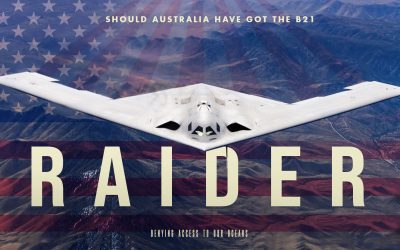
A similar equivalent today—adapted for overcoming modern threats—would be something like the B-21, and since we don’t possess such a weapon, in a sense we never found an aircraft to directly replace the F-111—a stand-alone area-denial tool with long range, no need for tanker support, a good payload, and the ability to cut through threats, strike incoming threats far off our coasts, and escape back home unharmed.
The Pig, was an incredible platform.