
American Military Aircraft: Icons of Power and Innovation

Boeing Wins Navy FA-XX Contract
Boeing has been announced as the winner of the US Navy's 6-generation fighter, aka FA-XX. This now means that Boeing will produce the USAF F-47 and the Navy's FA-XX, effectively cornering the market for US sixth-gen fighter production. What does this mean for Lockheed...

F-111 in Vietnam | COMBAT LANCER
In 1968, six F-111As were sent to Thailand for Combat Lancer. - the aircraft’s first combat deployment and a key test of its new low-level strike capabilities. The F-111s flew at night, in poor weather, and without visual contact with their targets, yet still showed...

A-37 Dragonfly
The Cessna A-37 Dragonfly earned a reputation as one of the most effective close-support and counter-insurgency aircraft of the Vietnam war. From a small jet trainer, the “Super Tweet” was transformed into a heavily armed CAS aircraft capable of carrying thousands of...

F-15N | the forgotten ‘Sea Eagle’
In the early 1970s, McDonnell Douglas proposed a carrier-based version of the F-15 for the US Navy. Known as the F-15N, it promised extraordinary speed, a lighter airframe, and more advanced avionics. But adapting the Eagle for carrier operations meant solving one...

A-7D | Precise & Revolutionary
The A-7D Corsair II was never intended to become one of the U.S. Air Force's greatest strike aircraft. Originally acquired as a stopgap solution during the Vietnam War, it evolved into arguably the most accurate conventional attack aircraft of the conflict. Equipped...

F-100 Super Sabre
The North American F-100 Super Sabre was America's first operational supersonic fighter, but its journey from cutting-edge air-superiority aircraft to one of the most important strike fighters of the Vietnam War was anything but straightforward. Plagued by dangerous...

F-5: The best dogfighter of its time?
From Cold War necessity to Top Gun legend, the Northrop F-5 Freedom Fighter became one of the most agile and influential lightweight fighters ever built. Originally designed as a low-cost export fighter to counter the spread of Soviet MiGs, the F-5 proved itself far...

F-18L: the forgotten land-based Hornet
In the late 1970s, Northrop proposed the F-18L — a land-based variant of the F/A-18, stripped of naval constraints and optimised for speed, agility, and cost. Lighter, simpler, and potentially more capable in several key areas, it was designed to compete directly with...
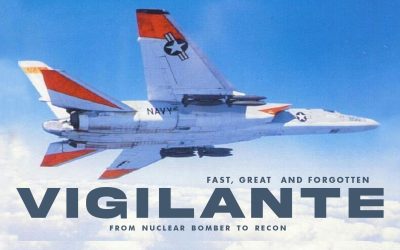
Why was the A-5 Vigilante forgotten?
Introduced in the early 1960s as a Mach 2 carrier-based nuclear bomber, the Vigilante pushed the limits of aviation technology. With cutting-edge systems like one of the first onboard digital computers, early fly-by-wire elements, and advanced navigation and bombing...
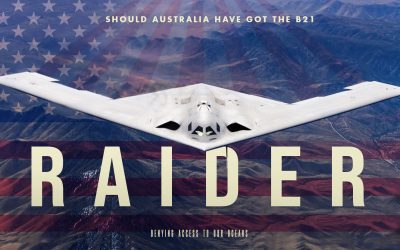
The B-21 Question: Why Australia Didn’t Buy America’s Most Advanced Bomber
Australia joining the B-21 Raider program was considered, by some, to be the right strategic move—but ultimately policy makers walked away from the long-range bomber option. Was that the right decision? In this video, we break down the strategic, financial, and...
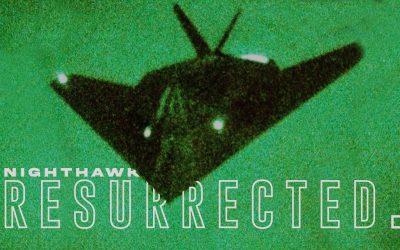
Why the F-117 Has Returned
The F-117 Nighthawk is one of the most iconic aircraft in aviation history. It was the world’s first true stealth plane, created through the secret Project Have Blue by the Lockheed Skunk Works team. Its unique faceted shape was designed to deflect radar signals, and...
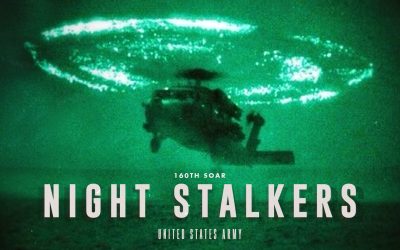
Night Stalkers | Helicopters of the 160th SOAR
Dive into the shadowy world of the 160th Special Operations Aviation Regiment, the elite Night Stalkers who piloted the high-stakes US raid on Venezuela in Operation Absolute Resolve. From their origins post-Eagle Claw to mastering advanced helicopters like the MH-47G...

The Gulf of Sidra Incident
In the 1980s, United States Navy airmen make history. In two rare engagements, American crews face off against eastern bloc fighters off the shores of Libya. Flying the F-14, these engagements helped define aerial combat as it entered the modern era, and – coinciding with the popularity of Top Gun – help to turn the Tomcat into the unrivalled icon of 1980s air power.

AC-130 Gunship: Origins, Upgrades, and Battlefield Dominance
The AC-130 gunship, a heavily armed variant of the Lockheed C-130 Hercules, originated during the Vietnam War as Project Gunship II to replace the AC-47 Spooky. Evolving through variants like the AC-130A Spectre, AC-130U Spooky, and modern AC-130J Ghostrider, it...

Grumman’s F-11 Tiger – The Forgotten Fighter of the 1950s
The Grumman F-11 Tiger, a supersonic carrier-based fighter of the 1950s, evolved from a privately funded upgrade to the F9F Cougar, incorporating the innovative area rule "coke-bottle" fuselage for reduced drag. Introduced in 1956 with the Wright J65 engine, it served...
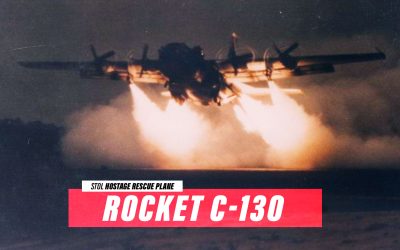
Rocket-Powered C-130
The rocket-powered C-130 Hercules emerged from the top-secret 1980 Operation Credible Sport, a rapid-response project to enable extreme short takeoff and landing (STOL) for a potential Iranian hostage rescue. Modified with 30 rockets—including Shrike, ASROC, and MK-56...

VENOM-AFT – No More Pilots
VENOM-AFT, the autonomous flight technology demonstrated on the X-62A VISTA (a modified F-16 testbed), marks a historic shift toward pilotless combat aircraft. In 2023, AI algorithms enabled the X-62A to engage in aggressive dogfights against human-piloted F-16s,...

The forgotten F-22 Raptor Stealth Bomber
The forgotten F-22 Raptor stealth bomber, known as the proposed Lockheed Martin FB-22, was a delta-wing strike variant of the F-22 designed in the early 2000s for enhanced bombing capabilities. Featuring greater payload (up to 30,000 pounds), extended range over 2,600...

How the F-102 Became a Night Fighter in Vietnam
How the F-102 became a night fighter in Vietnam adapted the Convair Delta Dagger's infrared search/track system for detecting heat sources on the Ho Chi Minh trail, arming it with AIM-4 Falcon missiles and 2.75-inch rockets for precision night strikes. Deployed from...

F4F Wildcat vs A6M Zero
F4F Wildcat vs A6M Zero compares WWII Pacific fighters: Grumman's sturdy Wildcat boasted armor, self-sealing tanks, and high-altitude prowess (39,500 ft ceiling) against Mitsubishi's agile Zero with superior turn radius, 3,000 km range, and low-speed control. Despite...

The Doomsday Planes
Doomsday planes ensure nuclear command continuity, from Cold War EC-135 Looking Glass mirroring SAC alerts to E-4 Nightwatch presidential bunkers, E-6 Mercury TACAMO relays, and retired E-8 JSTARS. Featuring EMP shielding, aerial refueling, and 24/7 readiness, they...

B-21 Raider
The B-21 Raider, Northrop Grumman's advanced stealth bomber unveiled in December 2022, is a flying-wing aircraft designed for global nuclear and conventional strikes, penetrating contested airspaces with superior low-observability. Evolving from B-2 Spirit heritage,...

How good was the P-80 Shooting Star?
The Lockheed P-80 Shooting Star, America's first operational jet fighter with its prototype flying in January 1944, redefined aviation speed at over 500 mph but saw no WWII combat due to late entry. Redesignated F-80 in Korea, it pioneered jet warfare with initial air...

F-105 Thud – Thunder in the Skies
The Republic F-105 Thunderchief, nicknamed "Thud," was a 1950s supersonic fighter-bomber designed for nuclear strikes, achieving Mach 2 speeds with J75 engines and carrying 14,000 pounds of ordnance plus a 20mm Vulcan cannon. As USAF's primary Vietnam strike aircraft,...